📄 Digital book in PDF · read it on your phone or print it
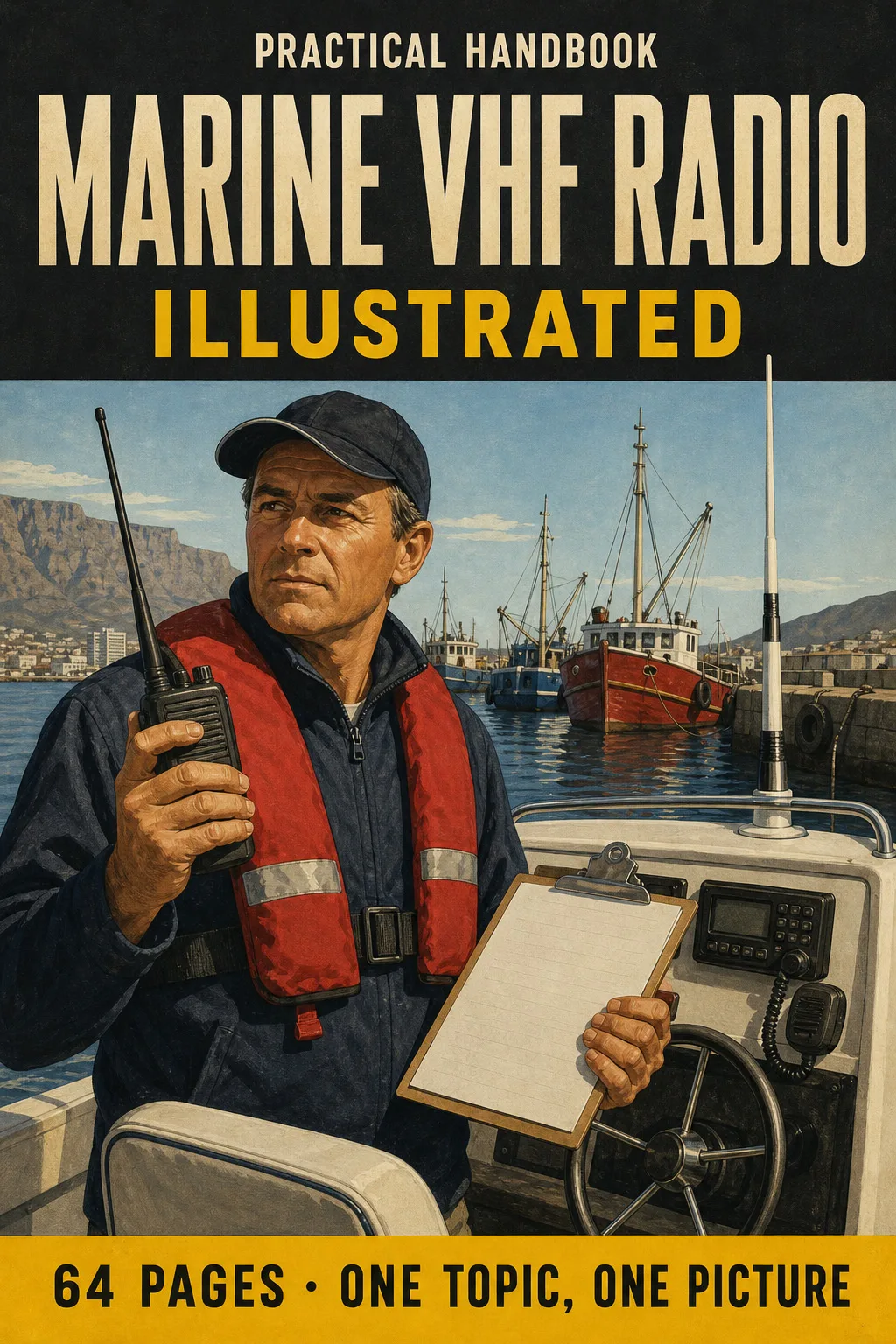
Written for South Africa: the set and its controls, range in km and nautical miles, Channel 16 and 70, the phonetic alphabet, the routine call, the DSC alert, MAYDAY, PAN-PAN and SECURITE. One topic per page: first the drawing, then what to remember. 64 illustrated pages.
🔒 Secure checkout · PDF by email · 30-day guarantee
Every page has one big drawing and a box with the steps, channels and words you need to know:


Swipe to see more →
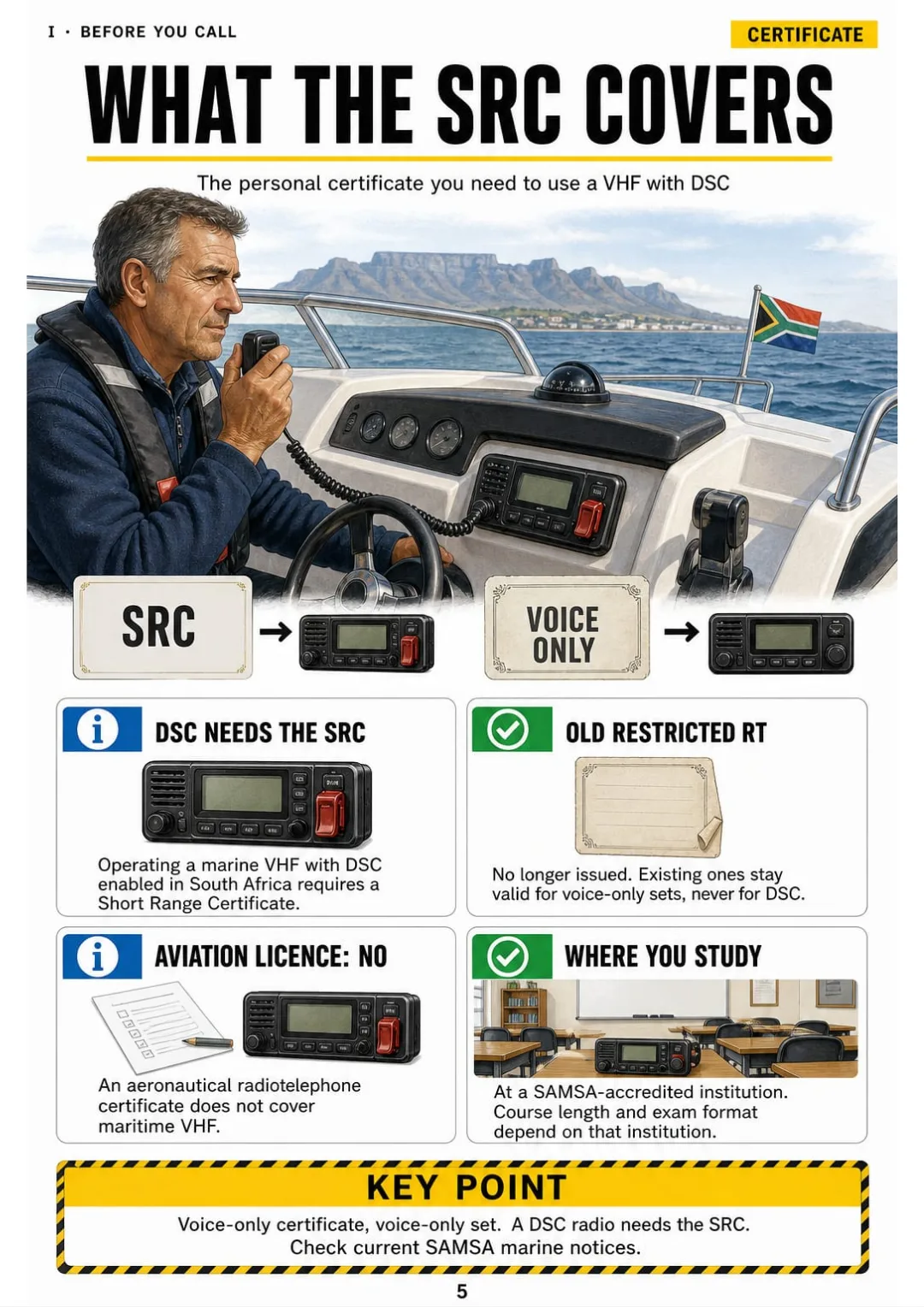
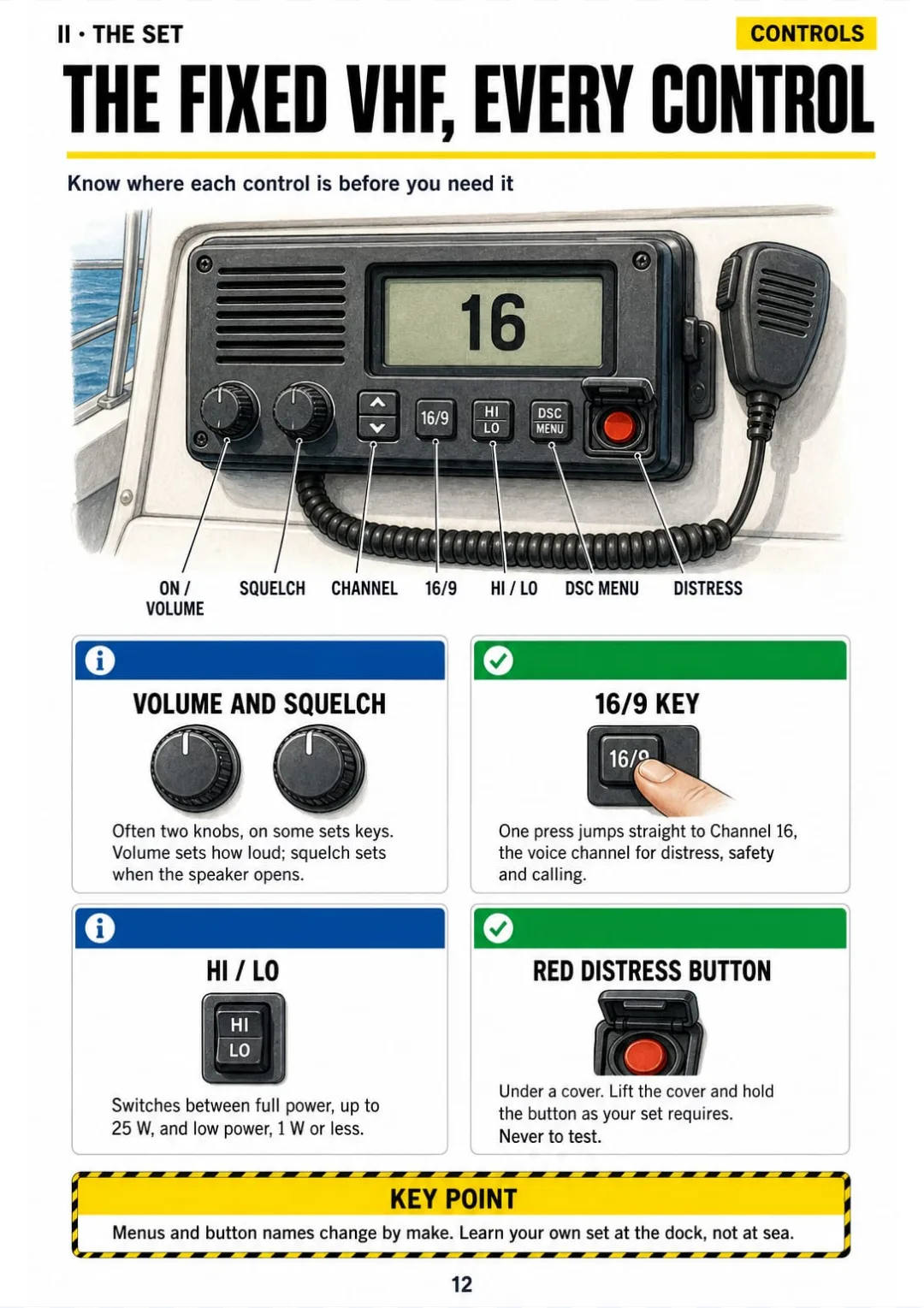
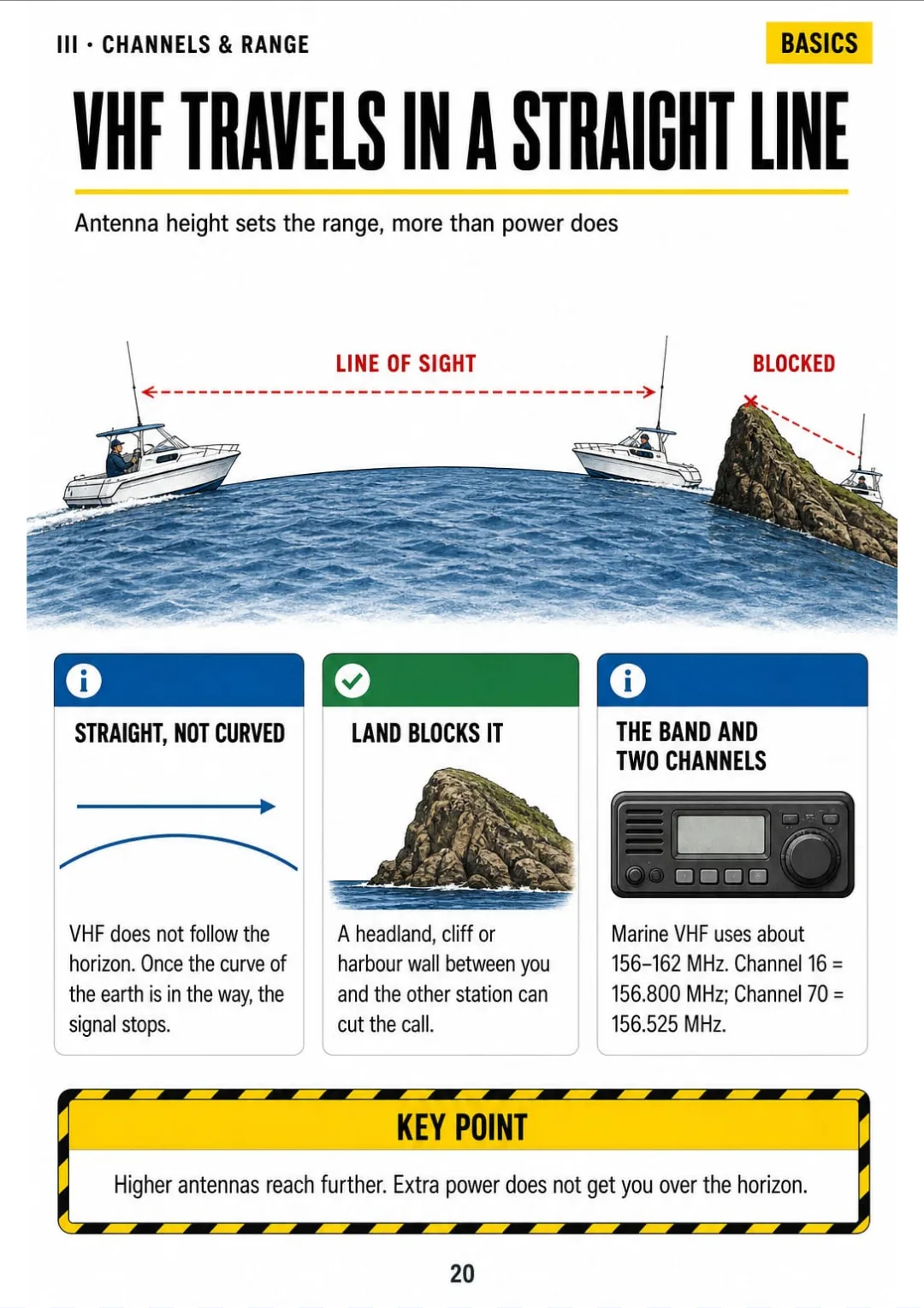
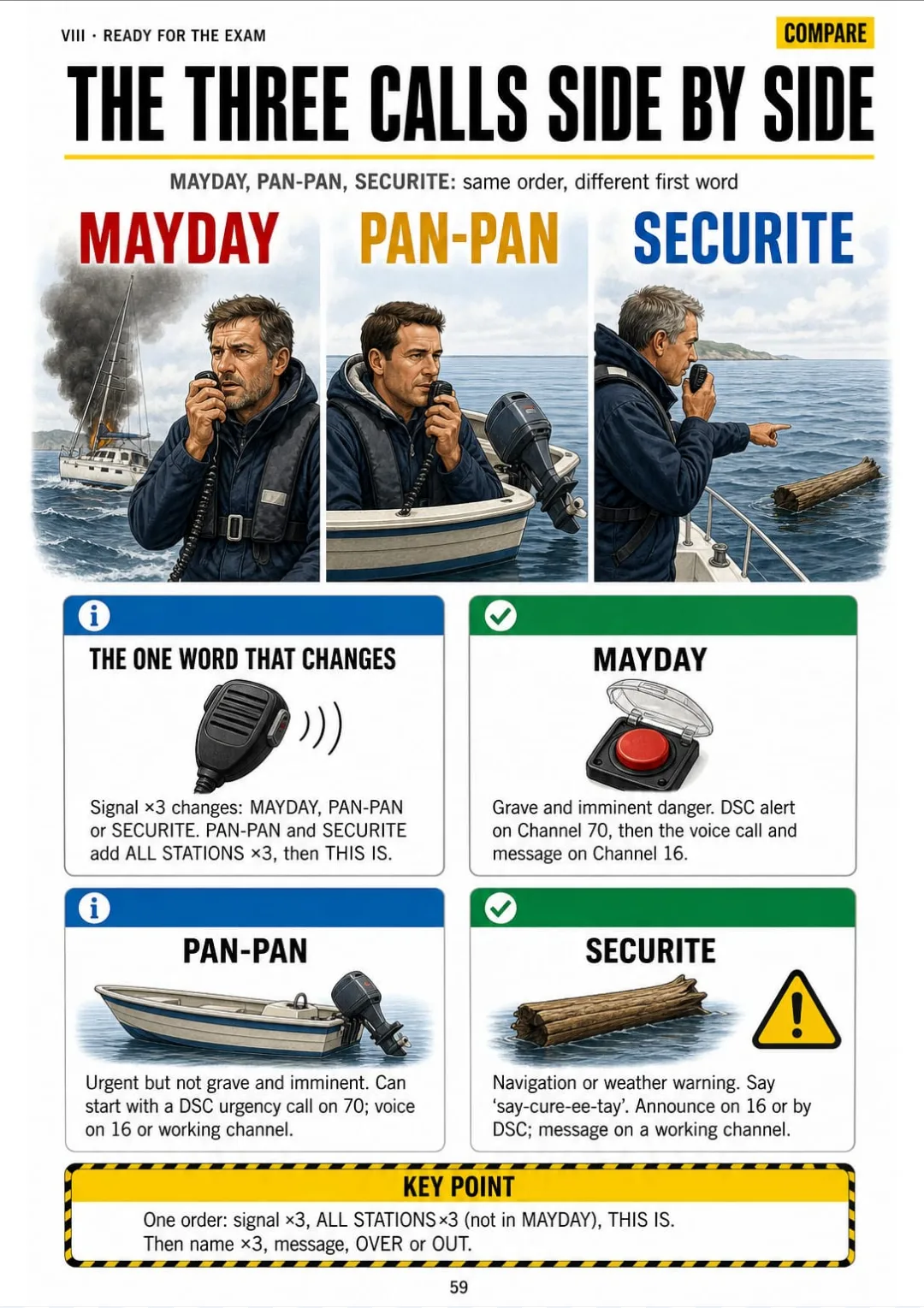
These are real pages from the book. The table of contents is the full one: 8 parts and 60 topics.
You're in the written exam and the question looks simple: why can't a 25-watt set on a low ski-boat reach a station beyond the horizon? You know it came up in the course, and right now it's gone.
The manual covers it in long paragraphs: frequencies, propagation, the curvature of the earth, a formula with square roots. Nothing you can picture with the mic in your hand.

In the book it's one page: two antennas, a straight line between them and the curve of the sea cutting it off. Raise the antenna and the line reaches further; more watts don't bend it. The box beside it gives an example in kilometres and nautical miles.
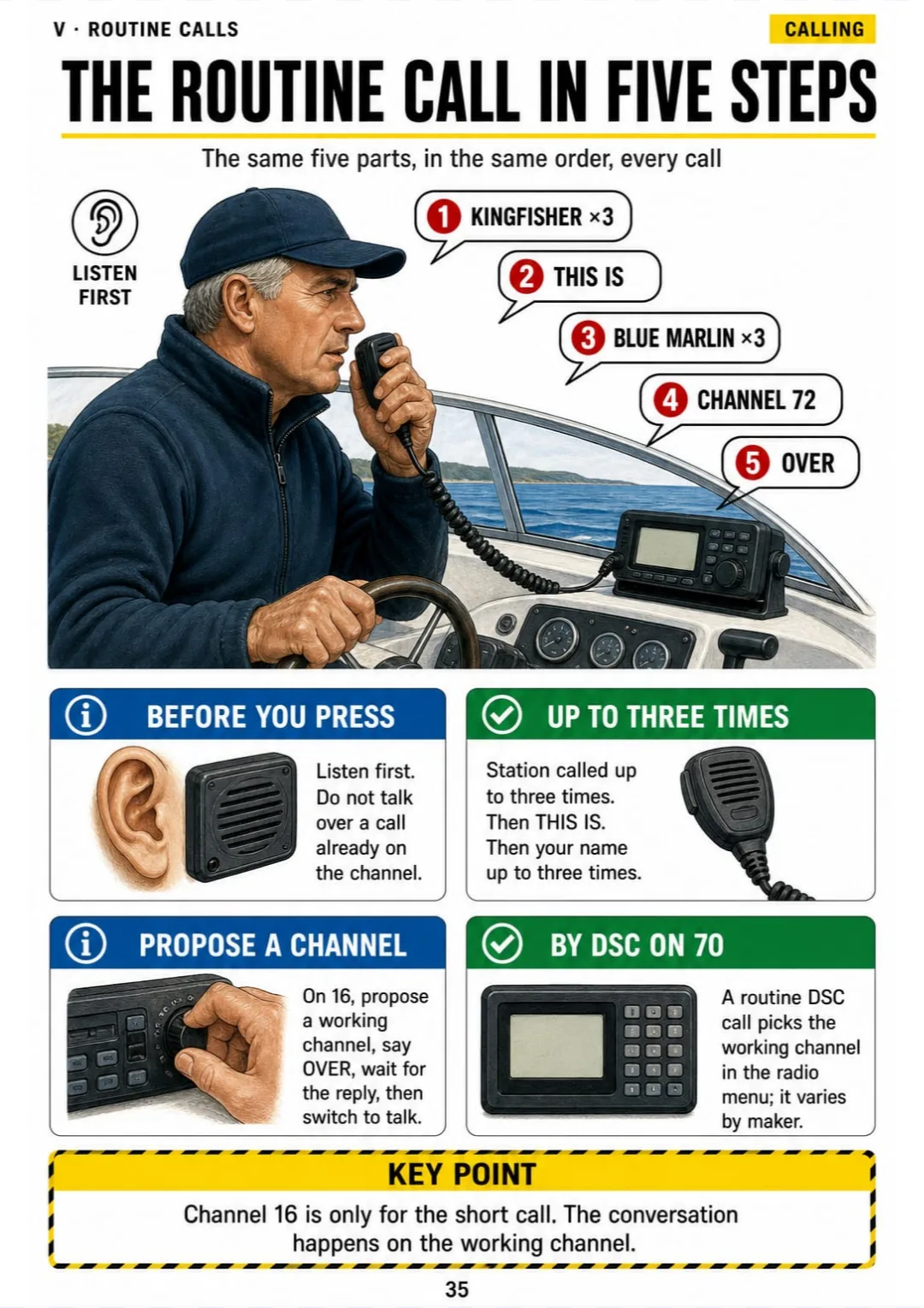
The same goes for the routine call, Channel 16 and Channel 70, the DSC distress alert, the MAYDAY message and PAN-PAN: each one has its own page.
You see why a call doesn't get through, and you sort it out without opening the manual again: a higher antenna, or the fixed set instead of the handheld.

Before your first call, the set in your hands, channels and range, speaking on the radio, routine calls, DSC, distress, urgency and safety, and ready for the exam: 64 pages, all illustrated
Think of it this way:
You're in the practical. The instructor hands you the mic and says: you're taking on water, send the distress. Button first or voice first, and what comes after the word MAYDAY?
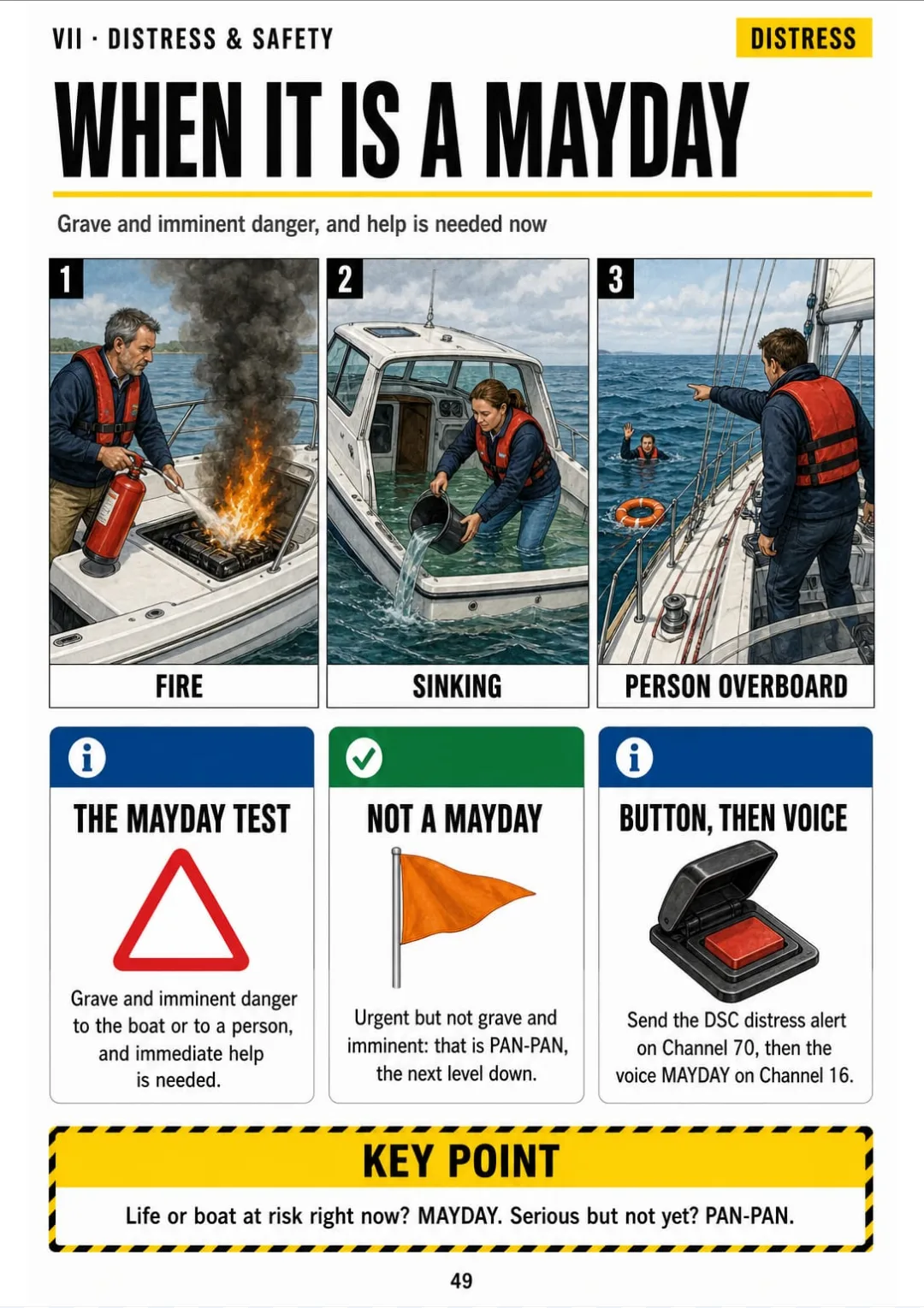
In the book you open the page on the DSC alert and the voice MAYDAY: the red button under its cover, the alert going out on Channel 70, then Channel 16 and the exact words in speech bubbles, numbered in the order you say them.

The same with the routine call, the radio check, the phonetic alphabet, PAN-PAN and cancelling a false alert: each one on its own page.
Marine VHF Radio Illustrated is 8 parts and 60 topics, all drawn, and at the end the three calls side by side, a practical run from radio check to MAYDAY and the page to keep next to the radio.
What you see drawn, you don't have to memorize.
What the SRC covers, your certificate and the boat's licence, the nine-digit MMSI, call sign and boat name, who listens, the radio rules in five lines and UTC time.
The fixed VHF with every control, squelch, 25 W or 1 W, the mic and press-to-talk key, the handheld, antenna and coax, 12 V power and fuse, and the GPS link DSC needs.
Line of sight, range in kilometres and nautical miles, Channel 16, Channel 70 for DSC only, ship-to-ship working channels, port channels, simplex and duplex.
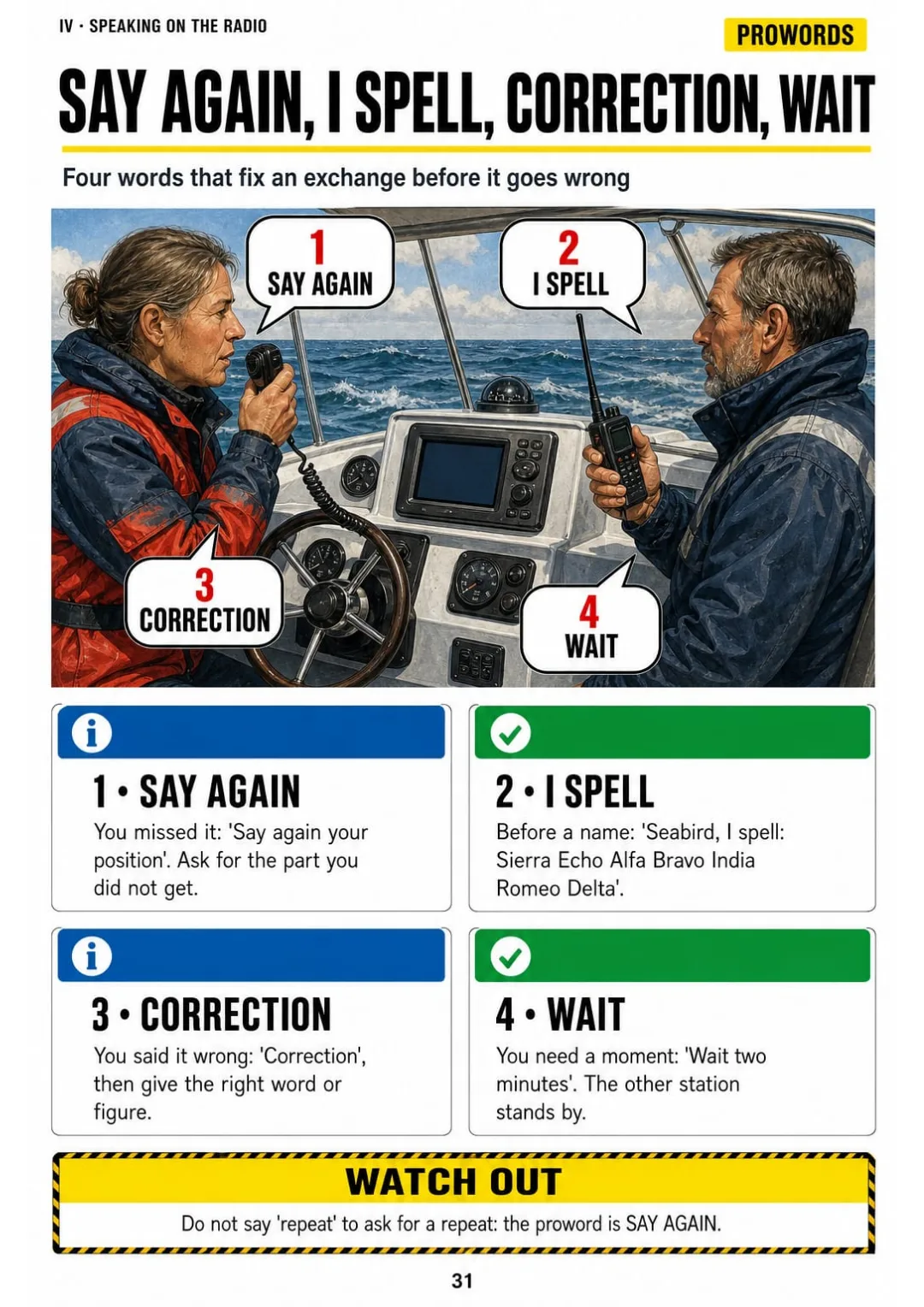
The phonetic alphabet from Alfa to Zulu, numbers the radio way, procedure words, giving your position two ways and the four habits of speaking clearly.
The routine call in five steps, switching to a working channel, the radio check, calling a coast station or port control, trip reports, answering a call and the radio log.
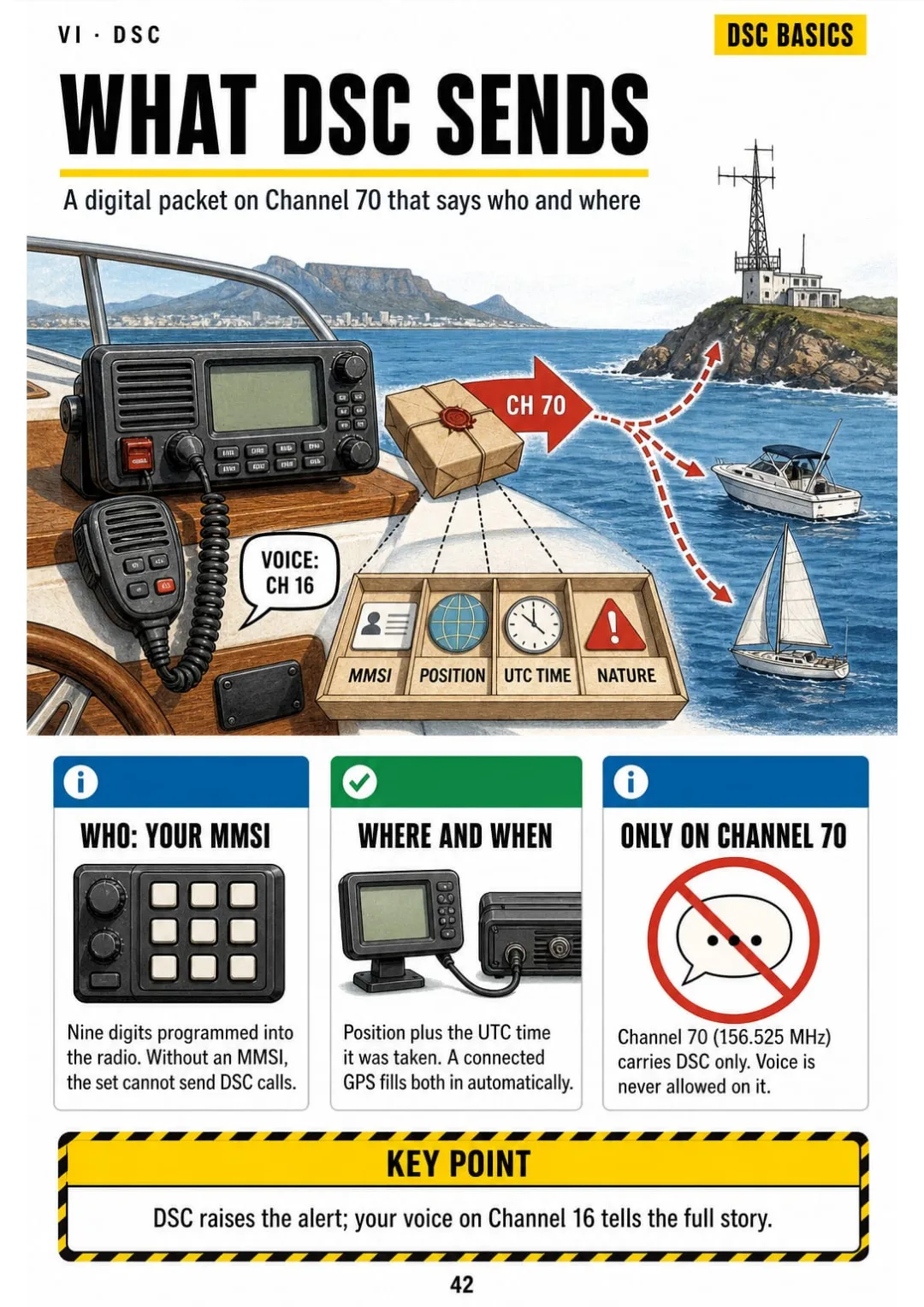
What DSC sends, the four priorities, the undesignated and designated distress alerts, the voice MAYDAY on 16 after the button, individual and group calls, and receiving an alert.
When it's a MAYDAY, the opening and the message in order, silence on the channel, the MAYDAY RELAY, PAN-PAN, SECURITE, cancelling a false alert, other distress gear and abandoning the boat with the handheld.
The three calls side by side, the most frequent mistakes in the practical, the channels to know by heart, a practical run, a pre-launch radio check list and the page to keep next to the radio.
At the end of the book: The three calls side by side, the most frequent mistakes in the practical, a practical run and a page to keep next to the radio.
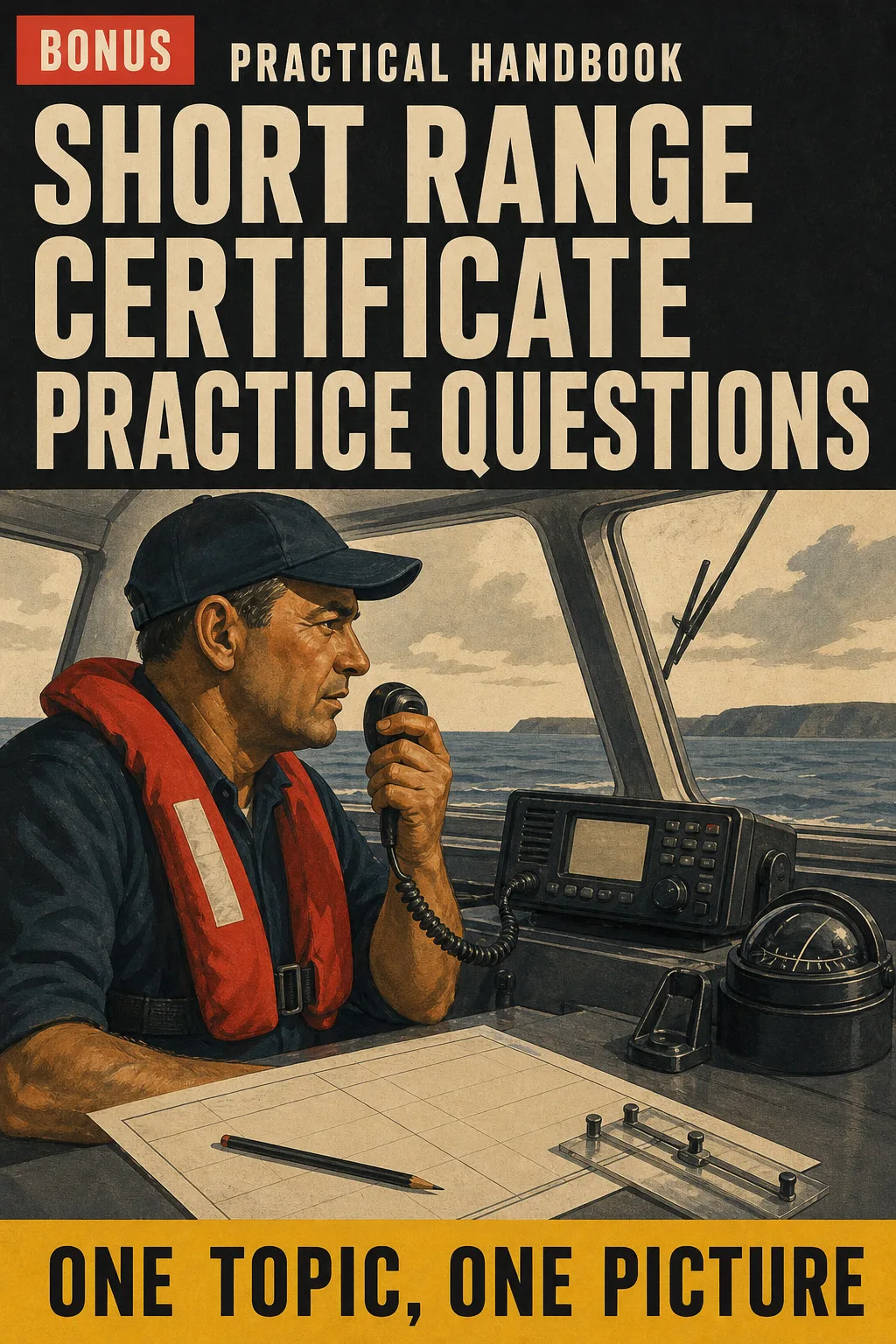
Exam-style questions with the answer explained, so you can test yourself on channels, DSC and distress procedure before the written and practical exam.

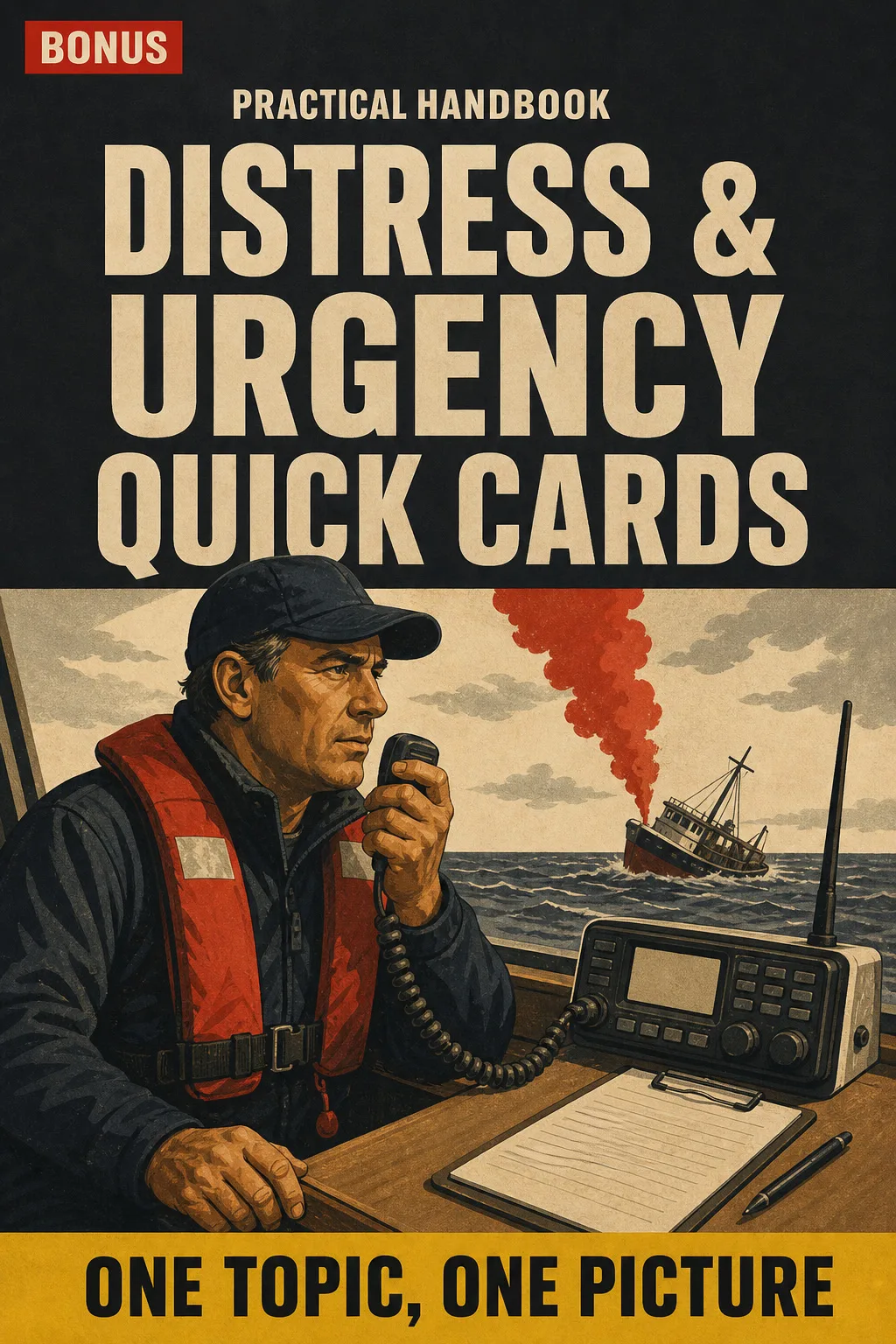
MAYDAY, PAN-PAN, SECURITE and the DSC alert on printable cards to keep next to the radio, so the words are in front of you when it matters.
📄 This is a digital PDF book sent to your email: nothing is printed or shipped.
PDF by email: We email you Marine VHF Radio Illustrated as a PDF, together with the two free books. It's a single payment: no installments, no extra charges.
Each topic of the course on its own page, drawn, so what the instructor explained on Saturday is still there on Monday.
The three calls side by side, the channels to know and a practical run, so you can say the MAYDAY out loud in the right order.
The DSC alert drawn step by step and a page to keep next to the radio, so the procedure is there if something happens with the family on board.
📄 This is a digital PDF book sent to your email: nothing is printed or shipped.
Try Marine VHF Radio Illustrated for 30 days, bonus books included.
We refund everything if the file won't open, if the book isn't what you see here, if you were charged twice or if the email doesn't arrive. Just email us.
You pay once. No subscriptions.
Yes. It starts with the set in your hands and goes in order to the MAYDAY, so it works as a first read and as a refresher. If you know the basics, the DSC and distress pages are where you'll spend your time.
From the current South African Maritime Safety Authority requirements for the Short Range Certificate, ICASA ship station licensing rules and the ITU Radio Regulations for VHF and DSC, checked against the current versions. It's written for South Africa, not adapted from a UK or US book, with ranges in kilometres and nautical miles.
No. It's an independent study guide, not affiliated with or endorsed by any authority, exam body or training provider.
No, and it doesn't give you a certificate: the Short Range Certificate is done through an accredited course and exam. The book is for after the course: revising the order before the written and the practical, and keeping on board next to the radio.
No. They're written for this book, in exam style, with the answer explained. They aren't official questions from any exam.
As a PDF by email, to the address you enter when you pay. The 2 bonus books come as PDFs too.
No. It's a once-off payment.
Yes. The PDF is made to print, at home or at a print shop, so you can keep it on board next to the radio.
You have 30 days. We refund everything if the file won't open, if the book isn't what you see on this page, if you were charged twice or if the email doesn't arrive: just email us.
No more rereading the manual and keeping nothing.
The MAYDAY order is drawn, and that's it.
You arrive at the practical knowing where everything is.
Drawings make studying faster.
The book is right below.
One-time payment: US$ 27 · Guarantee: 30 days · PDF by email
YES, I WANT MARINE VHF RADIO ILLUSTRATED FOR US$ 27📄 This is a digital PDF book sent to your email: nothing is printed or shipped.